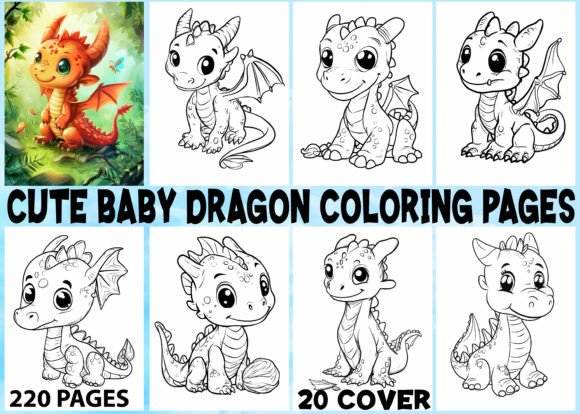
220 Cute Baby Dragon Coloring Pages Kids
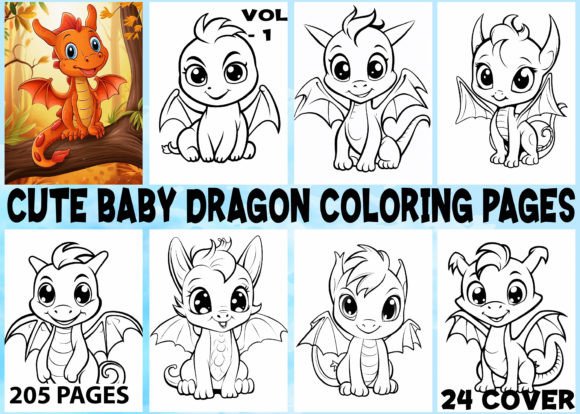
For creators building high-content books on Amazon KDP, 220 Cute Baby Dragon Coloring Pages Kids isn’t just another coloring pack—it’s a purpose-built asset with strategic leverage. Designed specifically for the constraints and opportunities of Kindle Direct Publishing, this interior delivers 220 original, hand-drawn baby dragon illustrations across three high-resolution formats: print-ready PDF (A4 and 8.5×11″), JPG, and PNG—all at 300 DPI. That technical precision matters—not as a checkbox, but as a foundation for consistency, scalability, and customer trust.
Why This Interior Fits Real Business Goals—Not Just Creative Impulse
Many KDP creators treat interiors as disposable scaffolding: “Get something in, publish fast, iterate later.” But that mindset undercuts long-term positioning. 220 Cute Baby Dragon Coloring Pages Kids supports deliberate business outcomes when aligned with clear goals. For example:
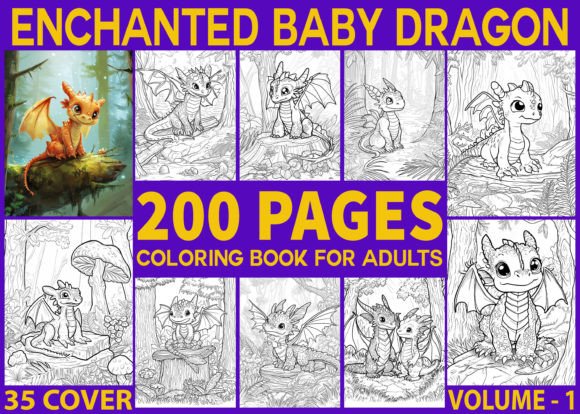
- Brand differentiation: In a saturated kids’ coloring niche, cohesive, whimsical, and technically polished art builds recognition. A consistent baby dragon motif—gentle, expressive, and age-appropriate—creates visual continuity across series (e.g., Volume 1 and Volume 2). Readers begin to associate your imprint with warmth, attention to detail, and child-safe creativity.
- Operational efficiency: Having all 220 pages pre-formatted in PDF, JPG, and PNG eliminates hours of resizing, color correction, or DPI troubleshooting. You’re not just saving time—you’re reducing error risk during upload, which directly impacts approval speed and time-to-revenue.
- Customer experience alignment: Parents and educators don’t buy coloring pages—they buy calm, engagement, and developmental support. These illustrations are designed with wide outlines, balanced negative space, and gentle contours—making them accessible for ages 3–8. That intentional design translates into fewer negative reviews about “too hard” or “confusing layouts.”
How to Use Volume 1 and Volume 2 Strategically—Not Just Sequentially
Volume 1 and Volume 2 aren’t filler versions of the same idea. They represent a scalable content architecture. Think of them as modular units you can deploy based on audience signals—not calendar dates.
Launch Volume 1 as your flagship title. Use early reviews and Amazon search term data to identify which dragon themes resonate most: fireless dragons? ones wearing tiny hats? sleeping dragons curled around stars? Then, let that feedback shape how you position Volume 2—not as “more of the same,” but as a thematic extension. For instance, if reviewers praise “calming dragons,” Volume 2 becomes 220 Cute Baby Dragon Coloring Pages For Kids Volume – 2: Soothing Scenes & Gentle Imagery. That’s not repackaging—it’s responsive branding.
You also gain flexibility in bundling. Combine both volumes into a premium “Dragon Duo Bundle” with a custom cover (using the included 20 high-res PNG cover templates). That bundle can command a higher price point while maintaining healthy margins—because your cost of goods sold hasn’t increased; only your perceived value has.
What to Consider Before You Upload—Beyond File Format
Having 300 DPI files doesn’t guarantee success. What determines performance is how thoughtfully those files serve your larger publishing strategy. Ask yourself these questions before listing:
- Is your target age group clearly reflected in your title and subtitle? “Cute Baby Dragon Coloring Pages For Kids” works—but “Cute Baby Dragon Coloring Pages For Ages 4–8: Simple Outlines, Big Smiles, No Frustration” performs better. Clarity reduces bounce rates and improves Amazon’s relevance scoring.
- Are your interior files truly print-ready—or just DPI-compliant? Open one PDF page at 100% zoom. Do margins breathe? Is the dragon centered without clipping on standard home printers? Test-print a sample page before bulk upload. A single margin error can trigger customer complaints—and hurt your long-term seller rating.
- Does your cover design reflect the interior’s tone? The 20 included PNG cover templates give you room to experiment—but avoid defaulting to generic “dragon + rainbow” combos. Instead, pull color cues or line weight from your interior art. If your dragons have soft watercolor-style shading (even in B&W), echo that texture subtly in your cover background.
Risks of Using 220 Cute Baby Dragon Coloring Pages Kids Without Context
This interior is powerful—but like any tool, it amplifies intent, not magic. Deploying it without planning introduces real risks:
- Commoditization: If your title, description, and cover look indistinguishable from dozens of other dragon books, Amazon’s algorithm will treat your listing as interchangeable. That means lower organic visibility, heavier dependence on ads, and thinner margins over time.
- Missed cross-sell potential: These pages can anchor broader product ecosystems—think matching flashcards, simple dragon-themed phonics worksheets, or even low-content journals with dragon corner motifs. Launching 220 Cute Baby Dragon Coloring Pages Kids in isolation forfeits that ecosystem-building opportunity.
- Unintended audience mismatch: While “cute baby dragon” appeals broadly, subtle cues matter. Are your dragons playful or sleepy? Are they solo or in groups? One creator found their “playful dragon + butterfly” pages drove strong engagement from preschool teachers—but their “dragon napping under a moon” pages resonated more with parents seeking bedtime routines. Ignoring those nuances flattens your messaging.
Practical Integration Tips—From Upload to Iteration
Here’s how experienced KDP publishers integrate 220 Cute Baby Dragon Coloring Pages Kids into their workflow—not as a one-off download, but as part of an iterative system:
- Pre-upload checklist: Run every PDF through Adobe Acrobat’s “Preflight” tool (or free alternatives like Sejda) to confirm bleed settings, embedded fonts (if any), and grayscale compliance. Even B&W files can carry hidden RGB elements that cause printing inconsistencies.
- Leverage format diversity intentionally: Use the JPGs for your Amazon preview thumbnails—they load faster and render more consistently across devices. Reserve PNGs for social media assets or email newsletter graphics where transparency matters (e.g., overlaying a dragon icon on a pastel background).
- Track what readers actually color: Monitor your “Search Inside the Book” analytics (if enabled) and early reviews. Which pages get mentioned? “My daughter loved the dragon holding a cupcake” tells you more than “great book.” Note those motifs—and consider featuring them in your next volume’s cover or description.
- Build backward from your end goal: If your aim is $500/month in passive income from coloring books, calculate how many titles you need at what average price and conversion rate. Then ask: Does adding Volume 2 meaningfully accelerate that path—or does it dilute focus? Sometimes, refining one bestseller beats launching five undifferentiated sequels.
Long-Term Value Lies in Intentional Repetition—Not Just Volume
“220 pages” sounds substantial—until you realize that longevity on Amazon comes not from quantity, but from pattern recognition. Readers return to creators who solve predictable problems well. When you use 220 Cute Baby Dragon Coloring Pages Kids to deliver consistent quality—clean lines, thoughtful spacing, developmentally appropriate complexity—you’re not selling pages. You’re building reliability.
That reliability compounds. A parent who trusts your first dragon book is more likely to try your unicorn series, then your ocean animals bundle—even if the art style shifts slightly. Why? Because your underlying promise stays constant: “I make coloring books that work for real kids, real homes, real printers.”
So treat 220 Cute Baby Dragon Coloring Pages Kids not as static inventory, but as a calibrated instrument—one that earns its place in your catalog by enabling smarter decisions, cleaner execution, and stronger reader relationships. The dragons are cute. The real magic is in how deliberately you wield them.