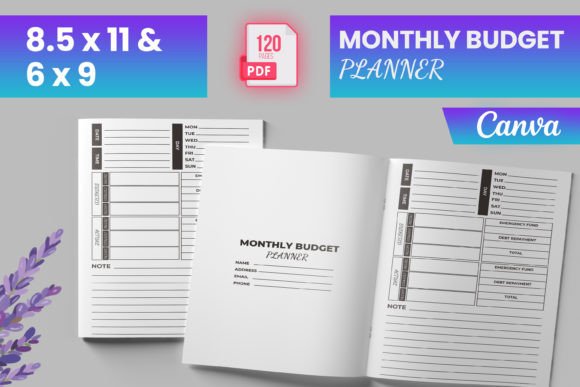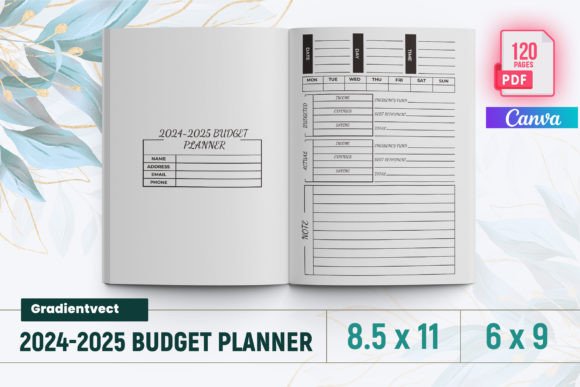
KDP 2024-2025 Budget Planner Canva
If you're publishing a budget planner on Amazon KDP—and especially if you're doing it for the first time—the interior design process can quickly become overwhelming. You need clean layouts, precise bleed settings, consistent margins, and Amazon-compliant file formats—all before you even consider content structure or visual appeal. That’s where the KDP 2024-2025 Budget Planner Canva stands out: it’s not just another printable PDF, but a production-ready interior built specifically for Kindle Direct Publishing in 2024–2025.
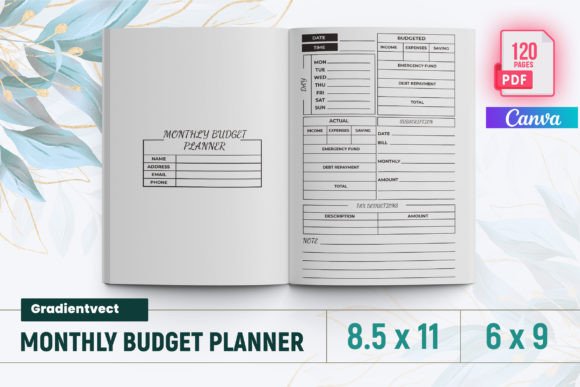
This isn’t a generic template you’ll need to reformat, resize, or debug. Every page is pre-tested on KDP’s live preview system. The 120-page interior includes all essential financial planning tools—Monthly Bill Tracker, Debt Payment Tracker, Income & Expense Trackers, Financial Calendar, Saving Jar visualizations, and even a Shopping List designed for real-world use—not just aesthetics. And because it’s built with KDP’s current specs in mind (including bleed, trim size options, and font embedding standards), your upload is far less likely to trigger warnings or rejection during review.
What Makes This Interior Truly “Ready to Upload”?
“Ready to upload” means more than just having a PDF. It means the file meets KDP’s technical requirements *without* requiring manual fixes. This interior delivers:
- A single, high-resolution PDF optimized for 6" x 9", 8.5" x 11", and other standard paperback sizes—no cropping surprises or layout shifts across formats.
- Bleed included on all applicable pages (essential for full-bleed backgrounds or edge-to-edge graphics).
- Properly embedded fonts and CMYK color profiles—critical for accurate print output.
- An intro page that sets clear expectations for users, helping reduce negative reviews tied to confusion about functionality.
- Separate PNG and JPG source files—handy if you want to tweak individual pages in Canva or Photoshop later.
Unlike many free or low-cost planners that skip bleed, misalign grids, or use non-print-safe fonts, this interior was validated using KDP’s actual preview tool. That saves hours of trial-and-error—time you’d otherwise spend adjusting margins, re-exporting, or troubleshooting error messages like “bleed too small” or “low-resolution image.”
Who Benefits Most—and Why It Fits Real Workflows
Freelancers, solopreneurs, and side-hustlers often juggle income from multiple sources while managing irregular expenses. A static Excel sheet rarely captures the rhythm of quarterly taxes, seasonal client payments, or unexpected equipment costs. The KDP 2024-2025 Budget Planner Canva supports that reality with dedicated trackers: one page for recurring bills (with due date and category fields), another for variable income streams (freelance gigs, affiliate payouts, course sales), and a third for debt payoff progress—complete with visual payoff timelines.
Educators and financial literacy coaches also find value here. Because the interior includes editable elements (via Canva-compatible layers), they can customize headers, add school-specific expense categories, or insert local tax deadlines into the Financial Calendar. No coding or desktop publishing software required—just drag, drop, and export.
Small business owners launching their first self-published planner appreciate the “Belongs To” page—a subtle but effective personalization touch. It encourages users to write their name and year, increasing emotional investment and reducing perceived disposability. That small detail often translates into higher retention rates and better long-term user engagement—key signals Amazon’s algorithm weighs when ranking books in the Personal Finance or Budgeting categories.
Practical Use Cases Beyond the Obvious
While most buyers expect a budget planner for personal finance, savvy creators are repurposing this interior in ways that broaden its market:
- Coaching bundles: Add your logo and branding to the intro and “Belongs To” pages, then pair the planner with a short video course on money mindset—positioned as a “done-with-you” resource.
- Nonprofit toolkits: Community centers and credit counseling agencies adapt the Debt Payment Tracker and Monthly Bill Tracker for client workshops—printing physical copies without redesigning from scratch.
- Classroom integration: High school economics teachers use the Annual Finance summary and Income/Expense comparison pages as hands-on worksheets—reinforcing budgeting concepts with tangible, structured practice.
None of these require heavy customization. The structure is flexible enough to support adaptation, yet consistent enough to maintain professional credibility. And because the interior includes both digital-friendly layouts (clean lines, ample white space) and print-optimized features (thick borders, legible sans-serif fonts), it works whether users prefer writing by hand or typing directly into editable PDF fields.
Things to Keep in Mind Before You Publish
This interior is powerful—but it’s not magic. Its effectiveness depends on how well you pair it with thoughtful front matter and marketing. For example:
- The interior doesn’t include a cover. You’ll still need a compelling, keyword-optimized cover design aligned with current Amazon trends in the Finance & Money Management niche.
- While the pages are editable in Canva, the PDF itself is flattened for KDP compliance. If you plan extensive text edits post-download, work from the PNG/JPG layers first—then re-export the final PDF.
- It’s designed for U.S.-based financial conventions (e.g., monthly billing cycles, USD currency). International sellers may want to adjust date formats, currency symbols, or tax-related sections before uploading.
Also, remember that Amazon’s algorithm favors books with strong customer engagement. Consider adding a brief “How to Use This Planner” section in your book description—or link to a free companion guide via your author central page. That kind of added value helps turn one-time buyers into repeat readers.
Why Timing Matters: The 2024–2025 Focus
Financial planning tools age quickly. Tax brackets change. Subscription services launch or sunset. Even calendar-based features—like holiday spending prompts or back-to-school budgeting windows—need annual relevance. This interior reflects current realities: updated due dates for 2024 Q3/Q4 estimated taxes, space for new fintech tools (e.g., round-up savings apps), and simplified tracking for hybrid income models (W-2 + 1099 + passive revenue).
That specificity builds trust. When users see a planner that acknowledges today’s financial landscape—not a recycled 2020 version—they’re more likely to engage deeply, recommend it, and leave positive reviews. In turn, those signals help your book rank higher for terms like “2025 budget planner,” “KDP finance workbook,” or “printable debt tracker”—not just broad, competitive phrases.
Ultimately, the KDP 2024-2025 Budget Planner Canva removes friction—not just in file prep, but in audience alignment. It gives you a foundation that’s technically sound, visually functional, and contextually current. That lets you focus on what matters most: delivering real value to people trying to take control of their finances, one intentional page at a time.